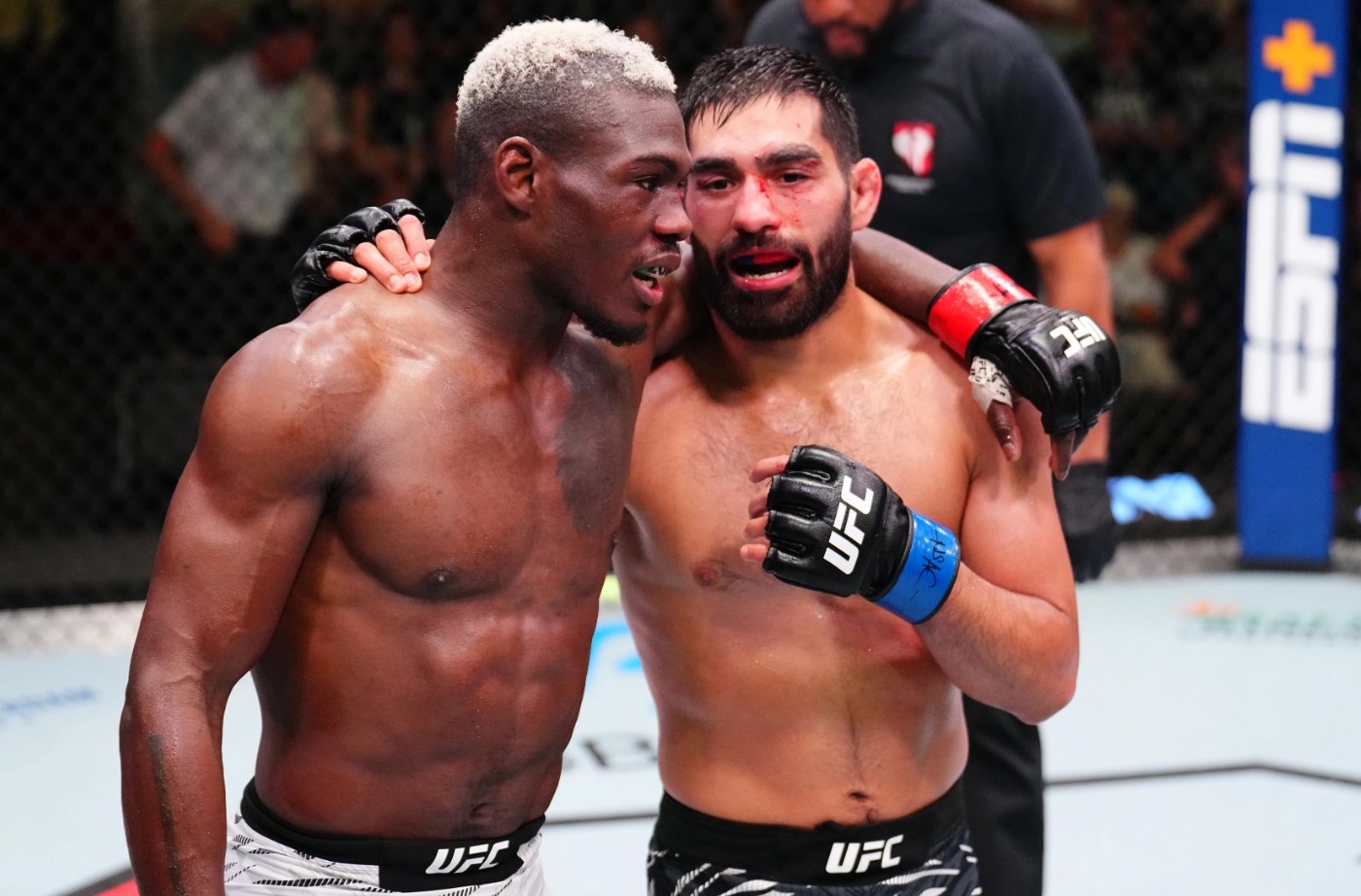
First contact with combat sports often happens by accident: an algorithm serves a knockout, a friend streams a main card, a highlight sneaks into a feed at midnight. Curiosity follows impact. The question arrives next: keep scrolling toward the Octagon or drift into the squared circle?
Choice often feels like a tease, a promise, a quick reveal. A clip flashes, commentary spikes, and attention commits before context forms. In that moment, format, pace, and clarity decide which doorway opens. Look at ganesha casino as a simple proof: both sports sell suspense, yet the packaging differs enough to nudge a newcomer’s path.
Contents
What Hooks First-Time Viewers in UFC
- Many ways to finish: Submissions, ground-and-pound, elbows from the break, and head kicks multiply payoffs. A single scramble can flip the night.
- Round-by-round variety: Clinch chess one minute, fence wrestling the next, clean striking after a reset. Rhythm never settles for long.
- Compact storytelling: Three rounds on most fights create urgency. Every minute counts, so broadcast segments move fast.
- Walkouts with character: Music, flags, and training camp lore frame a contest as a full character study rather than a single trick.
- Rule set that welcomes chaos without breaking: Unified rules limit fouls while preserving scrambles, which reads as organized wildness for a fresh audience.
UFC arrives like a festival of disciplines. A judo foot sweep shares space with a boxing combination and a calf kick that changes footwork for the rest of the bout. Newcomers often appreciate the visible cause and effect: a leg eaten early, a stance compromised later, a takedown opening a choke. The camera helps by showing fence work up close and using replays to underline micro-battles that the eye may miss in real time. Production leans cinematic, with overhead lighting, sharp cuts, and between-round packages that teach without lectures.
Pacing matters. Prelims stack quickly, finishes reset the set, and post-fight interviews arrive before attention drifts. Because roster depth touches many styles and nations, a card feels like world travel. A casual viewer who came for one star often stays for a new accent, a different stance, or a coach with a phrase that becomes a meme by morning.
Why Boxing Still Wins First Impressions
- Clean readability: Two hands, above-the-belt targets, and ring geography that makes sense within seconds. Even a novice reads momentum by how ropes and corners change the dance.
- Highlight precision: Jab accuracy, slip counters, and body shots with audible thud produce crisp teaching moments. Slow motion turns craft into spectacle.
- Round rhythm that breathes: Three minutes of action, one minute of corners. Viewers learn with the stool, hearing adjustments without homework.
- Title lineage and myth: Belts, weight classes, and historic rivalries give even an undercard a place in a long story.
- Crowd ritual: National anthems, robe reveals, and ring walks that feel like theater set an emotional frame before the first bell.
Boxing rewards attention to detail. The first two rounds often function as reconnaissance: distance measured by a jab, feints recorded for later, body shots planted like IOUs. For a newcomer, that slow burn can be a feature, not a bug. Commentary has room to point out foot placement, glove positioning, and micro-adjustments that later produce a knockdown. When the payoff arrives, the clip needs no subtitle. A left hook lands, a mouthguard skips across the canvas, and a building remembers why a simple rulebook can still cause a full-body reaction.
Broadcast choices also help. Corner cams invite eavesdropping, punch stats give a scaffold for debate, and overhead angles reveal how a ring becomes a maze or a trap. Because boxing cards often lean into regional pride, entrances echo through families and neighborhoods, which pulls casual fans who value civic theater as much as technique.
What Newcomers Actually Choose and Why
Price, schedules, and social context guide first steps as much as taste. A stacked UFC card with a clear start time and multiple styles may win a house party that wants a sure shot of drama. A boxing event with a local favorite or a unification storyline might win a living room that values narrative and big-fight electricity. Time zones count. A late main event pushes casual viewers toward the product that promises the earliest payoff.
Complexity tolerance shapes preference. Some audiences love puzzle density: scrambles, rule clarifications, and the chess of mixed ranges. Other audiences want clarity: two weapons, one target map, and a simpler scoreboard of impact. Neither choice is wrong. The better question is what kind of suspense feels rich rather than exhausting.
Culture finishes the nudge. UFC often resembles a sampler plate of global gyms, where wrestling rooms meet Muay Thai rings and Brazilian academies. Boxing often feels like a cathedral with stained-glass legends upstairs and fresh candles downstairs. A first-timer who loves origin myths might prefer championship lineage, while a first-timer who loves mashups and rapid variety may prefer the Octagon.
A Straightforward Starter Plan
Watch one event from each side with intent. For UFC, pick a card with styles that promise contrast: a grappler opposite a long-range kicker, a pressure boxer opposite a counter striker. For boxing, pick a main event with a clear storyline: belt unification, undefeated prospects, or a veteran attempting a reinvention. Keep a short log of observations: what created damage, how corners adjusted, how the referee shaped pace. By the second weekend, preferences will announce themselves.
Final Bell: Choose the Rhythm That Feeds Curiosity
Both sports sell controlled danger, craft, and stakes. UFC offers variety and sudden-phase changes that feel like a roller coaster with smart brakes. Boxing offers focus, geometry, and payoffs that land like punctuation at the end of a well-written sentence. Newcomer attention will always chase clarity, momentum, and community. Pick the door that turns five minutes into a habit, then let curiosity do the rest.